Florida Property Taxes: How Much Could You Save as a Homeowner in 2026?

- By Miguel E. Hernandez
- Jun 03, 2026
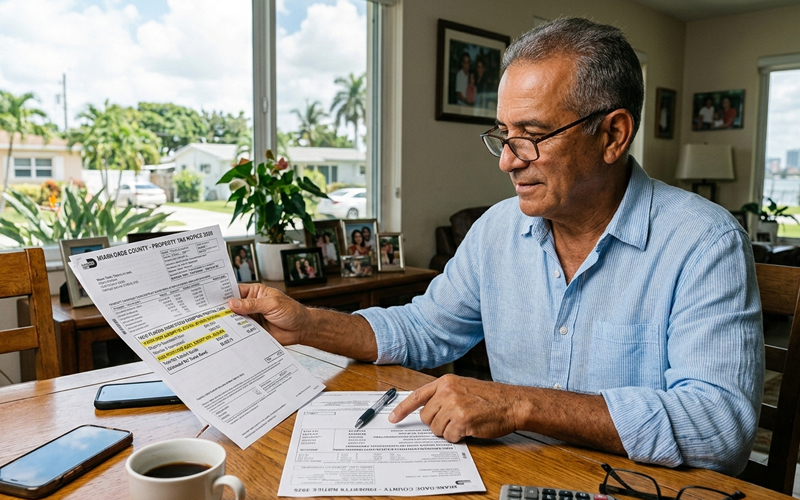
DeSantis proposes raising Florida's homestead exemption from $50K to $250K. Find out how much you could save on property taxes as a homeowner in 2026.
If you own a home in Florida, there is a development worth knowing about before the legislative year moves further along. Governor Ron DeSantis has put forward a proposal that — if approved — could significantly reduce your annual property tax bill. The state has even launched an online calculator so you can estimate exactly how much money could stay in your pocket. As a real estate agent with years of experience in the South Florida market, this type of legislative change matters deeply to me because it directly affects the real cost of homeownership in Miami-Dade. Let me break it down for you.
The proposal is generating real debate — some are calling it the most significant tax relief for Florida homeowners in decades, while others are warning about its consequences for local public services. My job here is not to take sides politically, but to give you the information you need to understand what this change would mean for your net worth and your decision to buy, sell, or hold property in Florida.
What Is DeSantis Proposing on Florida Property Taxes?
Currently, Florida offers homeowners who occupy their primary residence a $50,000 exemption on the taxable value of their property — known as the Homestead Exemption. In practical terms, if your home is assessed at $400,000, you only pay taxes on $350,000.
DeSantis's proposal seeks to raise that exemption from $50,000 to $250,000 starting in 2028. That would mean, in the same example, you would only pay taxes on $150,000 instead of $350,000. The difference on your annual tax bill can be substantial depending on your municipality's millage rate. Additionally, the proposal would require the Florida Legislature to give local governments the authority to increase the exemption even further — with a possible extension up to $500,000 for properties in that value range.
How Can You Calculate Your Potential Savings?
The Florida government launched an official calculator at saveourhomesfl.com where you can enter your property's value and receive three estimates: your current 2025 tax bill, the projected bill under the new $250,000 exemption, and your estimated annual savings. If you own a property in Miami-Dade and have not checked it yet, the exercise is worth doing — some homeowners are seeing savings estimates of several thousand dollars per year.
A meaningful reduction in annual property taxes does not just benefit your cash flow as a homeowner — it can also change the return calculation on an investment property and expand the purchasing power of future buyers across Florida.Miguel E. Hernandez P.A., NegocioMiami
What Has to Happen Before This Becomes Law?
Important clarification: this is not law yet. The proposal must clear two mandatory hurdles, both requiring significant supermajorities:
- Step 1 — Florida Legislature: the proposal must receive approval from 60% of legislators in both the House and Senate to appear on the ballot.
- Step 2 — Florida voters: once on the November ballot, it needs the support of at least 60% of Florida voters to become a constitutional amendment.
In other words, we are looking at a proposal that — in the best case scenario — would take effect in 2028. The current calculators and projections are estimates. The proposal may be modified before it reaches voters, and the final exemption amounts could differ from the current version. That said, the fact that this discussion is actively underway is already a politically relevant signal for Florida's real estate market.
In over a decade working in South Florida real estate, I have seen how changes in tax policy directly affect buying decisions. A real reduction in the annual cost of homeownership means more buyers qualify for mortgages, lower total monthly expenses, and better returns on investment properties. If this proposal moves forward, its impact on the Miami market will be real and measurable.
Are you thinking about buying a property in Florida this year? The tax changes currently in motion make this a strategic moment to understand your real purchasing power. Start with your pre-qualification.
👉 Get Pre-Qualified Now — Free and No Commitment
The Other Side of the Coin: What Critics Are Saying
A proposal of this scale does not arrive without debate, and I think it is important that you understand both sides of the argument as a homeowner or prospective buyer. Critics of the initiative — primarily local governments, school districts, and public service organizations — point out that such a significant reduction in the taxable base could generate a loss of tens of billions of dollars in revenue for Florida's municipalities.
The specific impacts they fear include cuts to public school funding, fire departments, parks, and other municipal services. Some analysts are also warning about the possibility that local governments could introduce new fees for the use of currently free facilities — such as parks and community centers — to offset the lost tax revenue.
The proposal would also restrict how cities, counties, and school districts can use property tax revenue, limiting it to what the initiative defines as "essential services." DeSantis has responded to these concerns by arguing that the measure would force local governments to spend taxpayer funds more efficiently.
Who is right? That is a question for political debate and for Florida voters to decide in November. What I can tell you with certainty is that the outcome of that vote will have direct consequences on the cost of homeownership in this state — in either direction.
What Does This Mean for Miami's Real Estate Market in 2026?
Regardless of the proposal's final outcome, the debate has an immediate effect on the market: it brings visibility to the real cost of homeownership in Florida and opens a broader conversation about property value beyond the purchase price. For buyers currently analyzing whether now is the right time to enter the market, here is my read:
- If the proposal moves forward: a reduction in annual tax burden would improve homeowner cash flow, make the total monthly cost of ownership more accessible, and could stimulate additional demand — especially in the primary residence segment.
- If the proposal does not pass: the Miami market operates today under the existing rules and remains one of the strongest in the country. Investment decisions made today do not depend on a legislative proposal that is still two years from possible implementation.
- For buyers planning to move to Florida: the current Homestead Exemption is already a meaningful tax advantage if the property will be your primary residence. Making sure you apply for it correctly can represent immediate savings on your first tax bill.
If you want to explore available properties in Miami while the tax landscape continues to evolve, you can view our updated inventory here: view properties for sale in Miami.
Do you have questions about how Florida property taxes affect your buying decision in Miami? That is exactly the kind of conversation I like to have before anyone signs anything.
👉 Talk Directly with Miguel — No Pressure, No Obligation
Frequently Asked Questions
What is the Homestead Exemption in Florida and how does it work?
The Homestead Exemption is a tax benefit that reduces the taxable value of your primary residence in Florida. Currently, if your property qualifies, the first $50,000 of its assessed value is exempt from taxation — which directly reduces your annual tax bill. To apply, the property must be your primary residence and you must file before March 1 of the corresponding tax year with your county's Property Appraiser office.
When would the new $250,000 exemption take effect if approved?
If the proposal clears both required hurdles — approval from 60% of the Florida Legislature and support from 60% of voters in the November elections — the new exemption of up to $250,000 would take effect in 2028. Until then, the current $50,000 exemption remains in place for most primary homeowners.
How can I calculate how much I would save under the new proposal?
The Florida government has made an official calculator available at saveourhomesfl.com where you can enter your property's value and see a comparative estimate between your current bill and the projected amount under the new exemption. Keep in mind that these are estimates — the final numbers will depend on any modifications the proposal undergoes before reaching the ballot and on your specific municipality's millage rate.
Does this exemption apply to investment properties or rentals in Florida?
No. Both the current $50,000 exemption and the proposed $250,000 increase apply exclusively to the owner's primary residence — meaning the property where you permanently reside. Investment properties, vacation rentals, and second homes do not qualify for the Homestead Exemption and continue to be taxed on their full assessed value.
Should I buy in Miami now or wait for the tax change to be approved?
In my experience, waiting on legislative changes to make real estate decisions is rarely the right strategy. The proposal is two years away from possible implementation at best, it may change significantly before reaching voters, and the Miami market will not wait. Available inventory today, current mortgage rates, and your personal financial situation carry far more weight in your buying decision than an exemption that is not yet law. My recommendation: evaluate your situation today with complete information — including possible tax scenarios — and act when the numbers make sense for you.
What Every Florida Homeowner and Buyer Needs to Know
DeSantis's proposal is relevant, it is active, and it is worth following closely if you are a Florida homeowner or considering becoming one. Raising the exemption from $50,000 to $250,000 would represent the most significant fiscal change for Florida homeowners in many decades — and its impact on the real estate market, monthly cost of ownership, and investment returns would be real and measurable.
That said, buying decisions that hold up over time do not depend on what might happen two years from now — they depend on what makes sense today with the information available. Miami's 2026 market already offers favorable conditions for the prepared buyer: growing inventory, sellers willing to negotiate, and mortgage rates lower than last year.
If you want to work through how this tax context applies to your specific situation, contact me directly. That is exactly the conversation we should have before any major decision.