World Cup 2026 in Miami: Real Estate Lessons from Cities That Already Lived It

- By Miguel E. Hernandez
- Jun 06, 2026
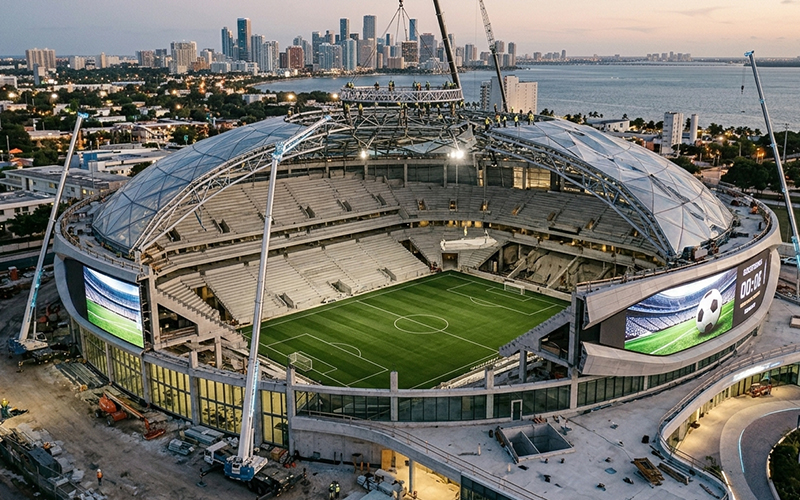
Brazil, Qatar, Russia, London. What happened to real estate in every World Cup host city? The lessons Miami should learn — and what they mean for you in 2026.
Every time a city hosts a FIFA World Cup, the real estate market responds. Sometimes spectacularly. Sometimes surprisingly. And always with lessons worth studying before making investment decisions. As a real estate agent with years of experience in the South Florida market, I believe the best way to understand what may happen to Miami's market during and after the 2026 World Cup is not to guess — it is to examine what actually happened in Brazil, Qatar, Russia, and other countries that lived through this event firsthand. In this article I do that analysis with real data and share my perspective on what it means for Miami — and for you, whether you are thinking about buying, selling, or investing.
History does not repeat itself exactly, but it rhymes. And the pattern that emerges from the last four World Cup editions is clearer than most people think.
The Repeating Pattern: How the World Cup Impacts Real Estate Before, During and After
Before diving into each specific case, it is useful to understand the general pattern the data shows across all host cities in recent decades. According to Goldman Sachs data, host cities tend to experience average property value appreciation of approximately 2.5% in the years following the event. But that average conceals a more complex story — with clear winners, unexpected losers, and significant differences depending on the type of city, its pre-existing infrastructure, and its ability to convert the event into a platform for sustained growth.
The general pattern has three phases: an anticipation phase (2 to 4 years before the tournament) where prices rise driven by infrastructure investment and media attention; an event phase where short-term rental prices surge but sale prices remain stable or rise modestly; and a post-event phase where lasting impact depends almost entirely on whether the city had solid fundamentals before the tournament began.
The World Cup does not create strong real estate markets — it amplifies them. Cities that already had solid fundamentals came out stronger. Those that depended on the tournament to boost weak markets suffered the inevitable correction afterward.
Case by Case: What Happened to Real Estate in Each Host City
🇧🇷 Brazil 2014: The Boom That Could Not Sustain Itself
The 2014 Brazil World Cup arrived preceded by unprecedented real estate euphoria. Brazil invested $11 billion in infrastructure, with stadium construction, airports, and transportation networks across São Paulo, Rio de Janeiro, and Fortaleza. Residential property prices in São Paulo increased 25% between 2010 and 2013. Rents rose 95% in São Paulo and 132% in Rio de Janeiro between 2008 and 2013. During the tournament itself, temporary rentals in Rio de Janeiro tripled.
And after? The correction was inevitable. Brazil did not have the economic fundamentals to sustain those valuation levels — the 2015–2016 recession combined with the oversupply generated by pre-World Cup speculative construction led to a significant correction across several markets. The lesson from Brazil is clear: the World Cup can artificially inflate prices when the underlying economic fundamentals cannot support them. The boom was real, but sustainability depended on factors Brazil simply did not have.
🇿🇦 South Africa 2010: Infrastructure That Transformed Neighborhoods
South Africa 2010 is one of the most interesting cases because the impact was geographically uneven — and that carries direct lessons for Miami. Massive investment in roads, airports, and public transport improved accessibility and raised property values in key areas of Johannesburg and Cape Town. However, some areas that bet heavily on the event suffered post-tournament oversupply issues. The lesson: the zones that benefited durably were those where infrastructure improvements had value independent of the World Cup.
🇷🇺 Russia 2018: A Punctual Effect Without Long-Term Legacy
Russia 2018 showed the other end of the spectrum. Short-term rental rates in zones near Moscow's stadiums tripled during the tournament. But the impact on property sale prices was modest and the long-term legacy was limited — partly because Russian market restrictions made it difficult for the foreign investment that typically follows these events to materialize. Without the component of sustained international demand, the World Cup's real estate effect faded relatively quickly.
🇶🇦 Qatar 2022: The Most Extreme — and Most Instructive — Case
Qatar 2022 is probably the most documented and most relevant case for understanding the extremes a World Cup can generate. Qatar invested more than $220 billion in infrastructure — including Lusail City, stadiums, and new transportation networks. Prices in Lusail City rose significantly between 2017 and 2021. In West Bay, Doha, commercial rents increased 25% over the same period. During the tournament, hotel occupancy in Doha peaked at 90%, with daily rates 45% higher than normal periods.
The short-term rental impact was extraordinary: apartments previously rented for $2,500 per month were offered at $1,700 per night during the tournament. In the first half of 2022, rents in The Pearl grew 23% year-over-year. And after? By 2024, the market experienced a correction with rent reductions of 4% to 6% — but the market did not return to pre-event levels and remained above the trend it was showing before the tournament. Four years after the World Cup, renters in Doha still have not seen a full price correction.
The downside of Qatar: the $220 billion investment resulted in a housing surplus of approximately 80,000 units — significant oversupply that took years to absorb. The lesson: event money can create more supply than the market can absorb when there is no real structural demand behind it.
🏙️ London 2012 and Paris 2024: The Model for Lasting Success
The Olympic Games are not exactly the same as the World Cup, but the real estate impact pattern is comparable — and the cases of London and Paris are the most positive in terms of durable legacy. Newham, the London borough that hosted the 2012 Olympic Village, saw property prices rise more than 400% over two decades — more than double the national average. Paris experienced similar momentum ahead of the 2024 Games, with luxury neighborhoods near the Athletes' Village recording price increases of roughly 22%. Foreign interest in Paris luxury real estate surged by more than 70%.
What separates London and Paris from Brazil and Qatar? The answer is simple: both cities were already first-tier global markets with sustained international demand before the event. The tournament amplified something that already existed — it did not try to create something from nothing.

The pattern is clear after studying each case: cities with solid real estate markets, genuine international demand, and the capacity to absorb growth sustainably came out of the World Cup with stronger markets. Those that depended on the event to create something that did not already exist suffered corrections. In this analysis, Miami looks far more like London and Paris than like Qatar or Brazil.
Are you evaluating a purchase in Miami before or during the World Cup? The time to act with an advantage is before the effect fully consolidates into prices. The first step is knowing exactly what budget you are working with.
Miami 2026: More Like London or More Like Qatar?
This is the question that matters most for any buyer or investor evaluating Miami in the World Cup context. And my answer, backed by the data, is clear: Miami is structurally far more similar to the success cases than to the correction cases. Here is why:
Miami Was Already a Global Market Before the World Cup
Unlike Qatar — which needed $220 billion to build the infrastructure of a world-class real estate market practically from scratch — Miami already leads the United States in international buyer volume. Major sporting events generate an initial emotional connection that transforms into investment decisions. Since the World Cup announcement, there has been a visible increase in buyer interest from multiple countries in Miami's market. That interest is not being built on nothing — it is adding to international demand that already existed and that the World Cup is simply amplifying.
No Oversupply Risk Like Qatar or Brazil
The structural problem in Brazil 2014 and Qatar 2022 was the massive construction of units the market could not absorb. In Miami, the context is radically different: available inventory is contracting for the third consecutive month in 2026, new multifamily deliveries are at their lowest since 2022, and structural housing demand remains robust. There is no supply excess to correct — there is controlled scarcity.
The G20 Multiplier Effect — December 2026
Miami has a differentiator no other 2026 World Cup host city can match: after the tournament, the G20 comes in December. That sequence of two first-tier global events in the same calendar year creates sustained international visibility that extends well beyond the summer. Shoma Group CEO Masoud Shojaee reflects: "Football is a cultural bridge that can transform into investment decisions" — and in Miami that transformation has a deep, liquid market where it can land.
The Warning Worth Heeding
The Paris 2024 case carries one lesson that applies directly to Miami: speculative overpricing in short-term rental can backfire. In Paris, Airbnb listings nearly doubled from 65,000 to 145,000 during the Games, creating massive oversupply that caused prices to crash 57% from initial asking rates. The property owner who set speculative prices ended up with lower income than the one who was realistic. In Miami, moderation in short-term rental expectations — and the prioritization of long-term rental as a long-term strategy — is the correct lesson to apply.
What Does History Tell Us About What Will Happen to Miami Prices After the World Cup?
Based on the analysis of previous cases and the specific characteristics of Miami's market, here is my projection:
- Short term (June–July 2026): short-term rental prices will reach historic peaks in zones near the stadium and in tourist neighborhoods. Sale prices will remain relatively stable — informed sellers do not discount properties during a period of maximum visibility.
- Medium term (August–December 2026): international purchase demand will be sustained by the G20 in December. Buyers who visited Miami during the World Cup and became interested will begin closing transactions in this period. It is the highest post-event buyer activity window.
- Long term (2027–2028): Miami should consolidate the appreciation initiated in the pre-World Cup period, backed by solid fundamentals — low vacancy, international demand, no state income tax, and its position as a first-tier global city. The correction Brazil experienced does not have the conditions to occur in Miami.
If you want to explore available properties today before the post-World Cup effect consolidates into prices, you can view updated inventory here: view properties for sale in Miami. And if you are looking for new construction projects with delivery horizons in 2027–2028, explore them here: view projects and pre-construction.
Do you own a property in Miami and want to know what it is worth during this moment of maximum international visibility? This is one of the best selling windows in the past decade.
Frequently Asked Questions
Did property prices rise in previous World Cup host cities?
Yes, in most cases — but with significant differences depending on context. In Brazil, residential prices rose up to 25% in São Paulo in the three years leading up to the 2014 tournament. In Qatar, zones like The Pearl recorded 23% year-over-year rent increases during 2022. Goldman Sachs estimates an average appreciation of around 2.5% in property values in the years following the event. Cities with solid pre-existing markets — like London — recorded far more sustained appreciation.
Did prices fall after the World Cup in host cities?
It depends on the case. In Brazil, a significant correction occurred in 2015–2016 driven by economic recession and oversupply. In Qatar, rents fell 4%–6% in 2024 but remained above pre-tournament levels. In cities with stronger markets — like Johannesburg or Russian cities — the post-event impact was more neutral. The most dramatic correction did not occur in a World Cup host city but in Paris during the 2024 Olympics, where speculative Airbnb overpricing led to a 57% drop in actual rates versus asking rates.
Why could Miami have a better outcome than other host cities?
Because Miami already has the fundamentals that the most successful host cities had before the event: active and documented international demand, the largest foreign buyer market in the country, low residential vacancy (4.9%), no state income tax, a consolidated position as a global city, and the G20 in December 2026 as a second catalyst. Unlike Qatar or Brazil, Miami does not depend on the World Cup to build its appeal — it already has it.
Is it a good time to buy in Miami before the World Cup?
Yes, and the historical analysis supports it. In all the host cities studied, buyers who entered during the 12 to 24 months before the tournament obtained better conditions than those who waited for the event or bought during the peak of media attention. In Miami, with inventory still reasonable, sellers negotiating, and mortgage rates lower than in 2025, current conditions are more favorable than those that will exist in the post-World Cup period when the effect consolidates into prices.
Which Miami zones will benefit most from the World Cup effect long term?
Based on the historical pattern of other host cities, the zones that benefit most in the long term are those combining infrastructure improvement with pre-existing structural demand. In Miami, that points to Miami Gardens and its radius of influence (where the stadium effect is most direct), Doral and Aventura (which already have solid international demand and strong connectivity), and Brickell and Downtown (where the tournament's global visibility effect adds to an already liquid and active market). The most speculative zones — without prior structural demand — carry the highest risk of post-event correction.
Miami Already Has What Other Cities Tried to Build for the World Cup
The history of previous World Cups has one central lesson that repeats across every case: the tournament amplifies what already exists, but cannot create what is not there. Qatar needed $220 billion to build the infrastructure of a global-class city practically from scratch. Brazil needed $11 billion to modernize markets that ultimately could not sustain themselves. London and Paris were already what they wanted to project to the world — and the event simply turned a spotlight on something genuine.
Miami is, of all the 2026 World Cup host cities, the one that most closely resembles that second profile. It is not preparing itself for the tournament — it has been what it is, with a real estate market that leads the country in international demand, historical appreciation, and structural fundamentals that no event can create but that this one will powerfully reinforce.
If you are a buyer looking to take advantage of this historic moment for Miami's market, get pre-qualified here and let's start with the real numbers. If you are a homeowner and this analysis makes you want to know your property's current value, request your free valuation. And if you want to talk through the situation with someone who knows this market from the inside, contact me directly.